
 繁体中文
繁体中文
 English
 VietNam
 Русский
 日本語
日本語

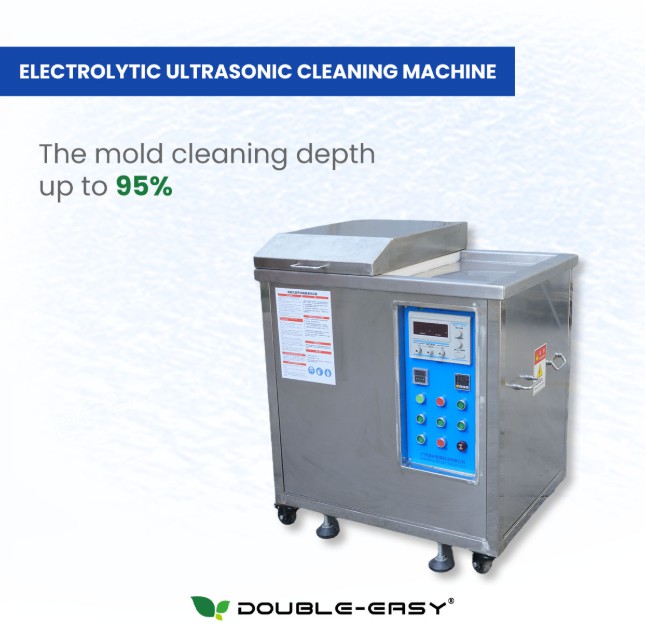
Have you ever wondered how a machine can remove rust from a deeply pitted surface without removing any good metal? The answer lies in the elegant combination of electrochemistry and acoustic physics. At Guangzhou Yizai Intelligent Technology Co., Ltd, we manufacture electrolytic ultrasonic cleaning machines that harness both.
Let’s break down the process step-by-step.
Step 1: The Electrolytic Bath
The machine contains a stainless steel tank filled with a mild alkaline or neutral electrolytic solution. The part to be cleaned is connected as a cathode (negative electrode), and the tank itself or separate anodes act as positive electrodes. A low-voltage DC current (typically 6–24V) is applied. This causes water electrolysis:
At the cathode (your part): Water molecules split into hydrogen gas (H₂) and hydroxide ions (OH⁻).
The hydrogen bubbles physically lift rust and dirt away.
Simultaneously, the hydroxide ions react with the metal surface, converting iron oxide (rust) into a soft, loosely attached black layer.
Step 2: Ultrasonic Cavitation
While electrolysis is running, piezoelectric transducers attached to the tank bottom generate high-frequency sound waves (usually 25kHz–40kHz for heavy cleaning). These sound waves create alternating high and low-pressure cycles in the liquid. During the low-pressure phase, microscopic vacuum bubbles form. During the high-pressure phase, these bubbles collapse violently, producing localized shockwaves and temperatures up to 5,000°C (but only on a microscopic scale). This implosion energy blasts away the loosened rust, grease, and carbon without damaging the base metal.
Step 3: Synergy
The two actions are not independent. Electrolysis produces continuous hydrogen bubbles that help cavitation clouds form more easily. And cavitation constantly scrubs away the reaction products, exposing fresh metal to electrolysis. This cycle repeats millions of times per second.
Why conventional methods fail
Sandblasting: Removes good metal and changes dimensions.
Acid dips: Dangerous chemicals, hydrogen embrittlement risk, hazardous waste.
Manual scrubbing: Cannot reach internal passages.
Our electrolytic ultrasonic cleaning machine solves all these problems. After cleaning, the part is simply rinsed with water and dried. In many cases, a passive layer forms on the metal surface, providing temporary rust resistance.
At Guangzhou Yizai Intelligent Technology, we engineer our machines for durability. Our transducers are bonded with high-strength epoxy and backed by forced-air cooling for continuous operation. The electrolytic power supply is regulated to prevent overcurrent or sparking. Tank sizes range from 10 liters to 500+ liters, depending on your parts.
Because we are located just 5 km from Baiyun Airport and Guangzhou North Railway Station, we offer fast delivery and on-site training for larger systems. Our team of engineers can also design custom electrode configurations for oddly shaped parts.
If you want truly clean metal – free of rust, oil, and residues – without labor or toxic chemicals, an electrolytic ultrasonic cleaning machine from Guangzhou Yizai is the answer.



 WhatsApp