
 繁体中文
繁体中文
 English
 VietNam
 Русский
 日本語
日本語

When evaluating cleaning equipment, purchase price is only the beginning. The true cost includes labor, consumables, downtime, waste disposal, and quality defects. Let's compare electrolytic ultrasonic cleaning with traditional methods across these dimensions.
Traditional Method 1: Manual Scrubbing
Manual cleaning is labor-intensive and inconsistent. Operators spend hours scrubbing molds with brushes, scrapers, and solvents. Results vary by operator skill, and hard-to-reach areas often remain contaminated.
Hidden costs: Labor hours, inconsistent quality, operator fatigue, potential mold damage from aggressive scraping.
Traditional Method 2: Chemical Solvents
Solvent dips and sprays are fast but come with serious drawbacks. Methylene chloride, acetone, and similar chemicals are toxic, flammable, and heavily regulated. Disposal costs are rising rapidly.
Hidden costs: Chemical purchase, hazardous waste disposal, regulatory compliance, worker safety equipment, ventilation systems.
Traditional Method 3: Sandblasting or Abrasive Blasting
Abrasive blasting removes contaminants quickly but erodes the mold surface. Over time, molds lose dimensional accuracy and require premature replacement.
Hidden costs: Abrasive media, mold wear, reduced tool life, surface damage requiring rework.
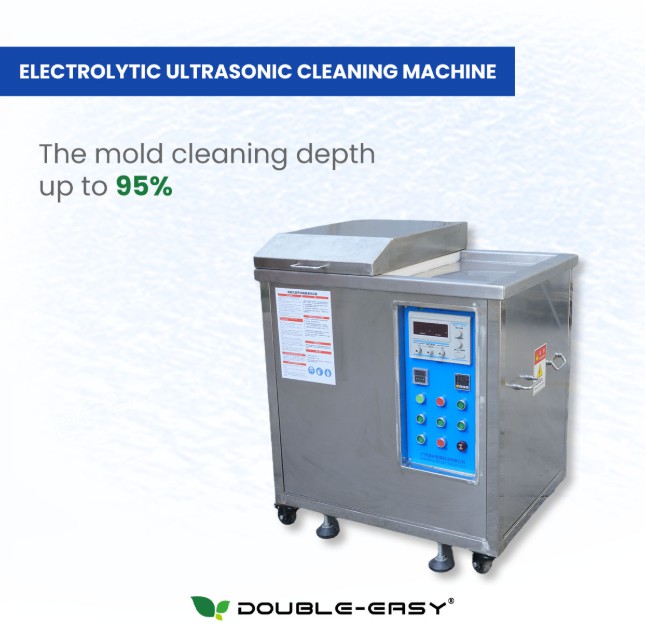
The Electrolytic Ultrasonic Advantage
Electrolytic ultrasonic cleaning eliminates most of these hidden costs:
Labor: Cleaning cycles are automated. An operator loads the mold, presses start, and returns when the cycle completes. No scrubbing required .
Consumables: The electrolyte solution is reusable and filtered continuously. Unlike solvents or abrasives, it is not 'consumed' in the traditional sense .
Downtime: Typical cleaning cycles run 3–10 minutes, compared to hours for manual methods. Molds return to production faster .
Waste Disposal: The mild alkaline electrolyte is biodegradable and safe for standard wastewater treatment. No hazardous waste manifests required .
Quality: Consistent, repeatable cleaning eliminates human error. First-pass yield improves, and mold life extends because the substrate is never damaged .
Calculating Your ROI
Consider a mold shop cleaning 20 molds per week:
Cost Factor Manual/Chemical Electrolytic Ultrasonic
Labor (hours/week) 40 10
Chemical/Media Cost $500/week $50/week
Waste Disposal $300/week $30/week
Mold Damage/Rework $200/week $20/week
Total Weekly $1,000+ $110
Annual savings: over $46,000. Payback on a Yizai electrolytic ultrasonic cleaning machine: typically 6–12 months.
Why Yizai?
Guangzhou Yizai Intelligent Technology Co., Ltd. has helped hundreds of manufacturers transition from outdated cleaning methods to electrolytic ultrasonic technology. Our machines are built with industrial-grade components—Mitsubishi PLCs, Schneider electronics, Grundfos pumps—for years of reliable service .
We offer free sample cleaning. Send us your dirtiest molds, and we will show you the quality difference and calculate your specific ROI.
Contact us today. Your bottom line will thank you.
/Electrolytic-Ultrasonic-Cleaning-machine-PG10538050



 WhatsApp